One of the first things we noticed, supporting inclusive citizen science pilots across Europe, was how easily technology could become a barrier. Not because apps are badly designed, but because the assumption that digital tools inherently lower barriers isn’t necessarily true for every community. Older adults may have no interest in learning to navigate a smartphone. Fishers who are out in rough weather with wet gloves won’t find touchscreens very convenient. And a frustrating experience with a citizen science app can leave people feeling more excluded, not less.
This often isn’t a tech problem, but rather a question of inclusion. The kind of question that only surfaces when you involve communities early enough to hear it.
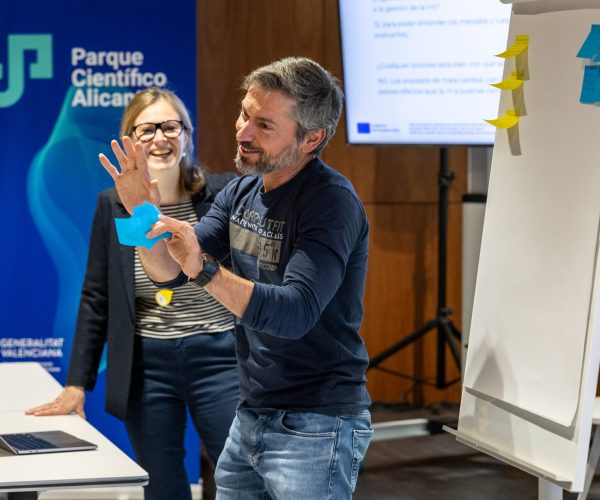
Through the European Citizen Science project, we coordinated support for seven pilots led by partner organisations across Europe, as well as ten public library events. Our role was to provide an outside perspective: surfacing blind spots, asking critical questions, and identifying patterns across very different contexts.
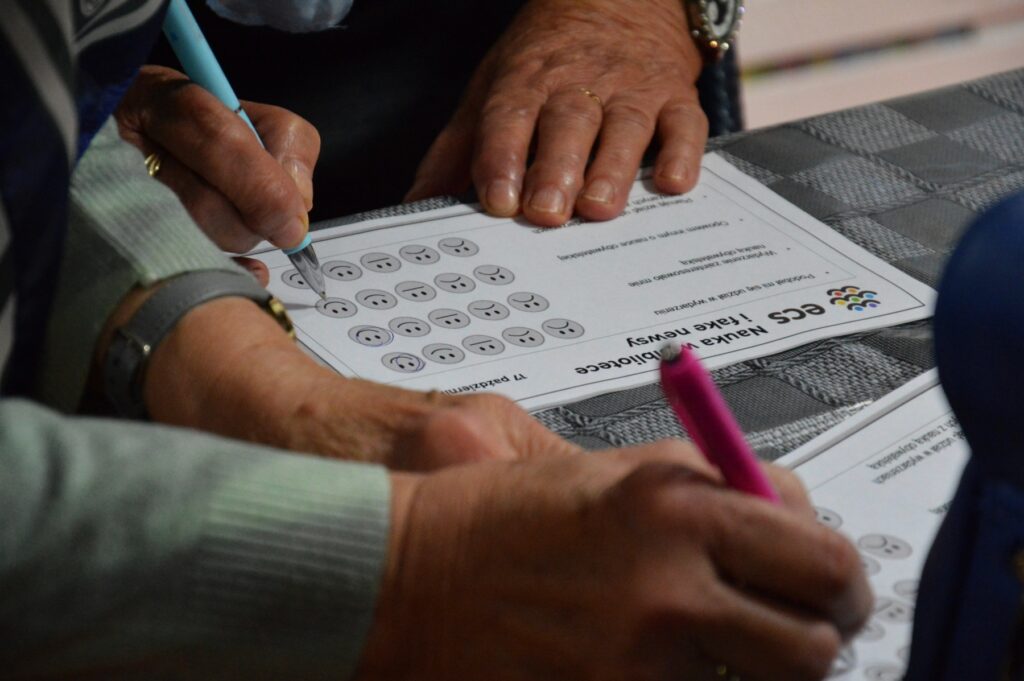
What we saw across the pilots was that having community involvement built in from the start meant these issues could actually be caught and addressed. In Barcelona, one pilot created artistic workshops alongside their odour-monitoring app, so older adults could contribute through olfactory memory timelines rather than smartphone screens. In Latvia,a library network let seniors share place names with pen and paper while teenagers handled digitisation. Different entry points based on what actually worked for people’s lives.
The more we observed, the clearer a pattern became. Across these very different contexts, relationship-building wasn’t just a warm-up phase before the “real” research – it was the foundation that made everything else possible.
The initiatives with the deepest engagement had often been at it for years. In Greenland, a community-based monitoring programme has run since 2009 – not just because of a well-designed protocol, but because it started from hunters’ and fishers’ existing frustration at being excluded from decisions that affected their livelihoods. Across Europe, librarians in small towns succeeded partly because they already knew community members. Trust was already there; the citizen science simply built on it
We also saw how quickly broad outreach falls flat when it isn’t grounded in how communities actually work. Planning around labels like “migrants” or “elderly” doesn’t get you very far on its own. The pilots that gained traction were the ones that got specific – working through trusted community leaders, adapting to what different subgroups actually cared about.
Drawing on these pilots, the library events, and three capacity-building workshops, we developed a framework structured around four pillars: an intersectional mindset, genuine co-design from project inception, accessible implementation, and a sustained impact beyond project timelines. The full deliverable unpacks these pillars into ten practical guidelines.
Inclusive citizen science is often at odds with the way that projects are typically structured. Short grant cycles don’t give trust the time it needs to develop. Evaluation frameworks that count data points miss what communities actually value – social connection, validation of their knowledge, seeing their contributions lead to something tangible. These aren’t problems that individual project teams can solve entirely on their own, but there’s still a lot that can be done at the project level. We hope these guidelines can support that, while also helping make the case for broader change.
Older adults in one pilot said the most important benefit wasn’t necessarily the project outcomes, or the science itself. It was being able to talk, be heard, and feel valued. That’s a pretty good measure of success, if you ask me.
– Alexandre Torres