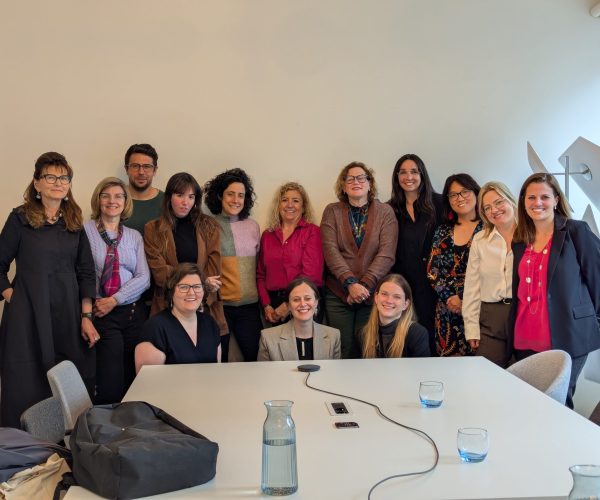
Over the past two years, the REINFORCING project has been quietly building something valuable: a growing community of researchers, innovators, and intermediaries who are learning what it means to put Open and Responsible Research and Innovation (ORRI) into practice together. At the heart of this effort is a modular training programme designed and delivered by Stickydot. Our aim? Not to lecture, but to engage.
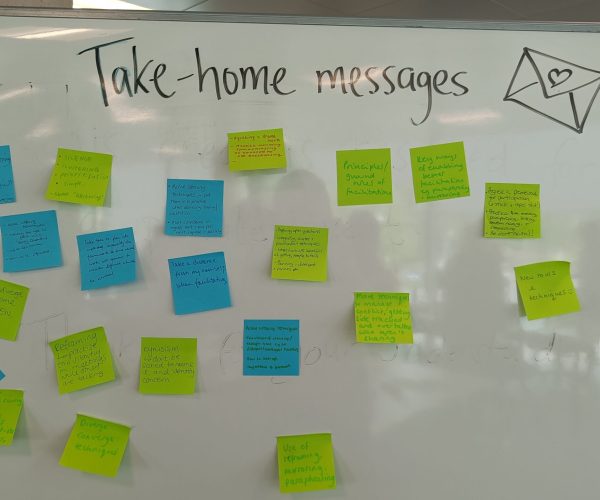
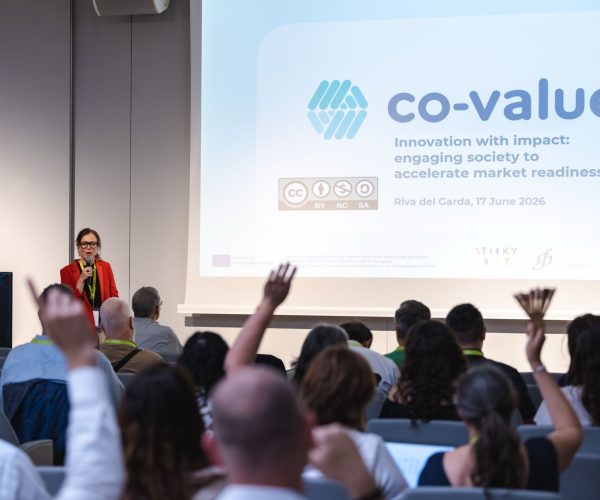
Every topic in our programme follows the same simple logic. A crash course opens the door with 90 minutes online, combining short expert talks and hands-on activities to introduce a key ORRI concept and make it immediately tangible. A clinic takes things further. Here participants bring their own real challenges to a peer-learning space, and the group works through them together.
This two-step format has proven its worth. As one participant put it after the facilitation skills crash course: “Really wide variety of backgrounds of people attending, validating to hear shared difficulties.”
“There’s not much training out there for this, so thanks.”
What we’ve explored
Since June 2024, we have delivered 13 crash courses and 12 clinics, bringing together more than 250 active participants from across the ORRI community.
The topics have ranged from the foundational to the practical: how ORRI has evolved from deficit models of science communication to today’s co-creation approaches; who to engage in R&I processes, and how to do it meaningfully; the role of facilitation in making participatory spaces truly inclusive; what citizens actually get out of engagement, and how to ensure their contributions are fairly recognised.
In more recent sessions, we have gone deeper into the methods themselves. These methods are co-design, co-creation, co-assessment, building consensus, and designing workshops that actually work. Each session has been shaped by what participants bring to it. Challenges raised in clinics have fed into future crash courses. The programme has grown alongside its community.
In their own words
We recently spoke with researchers who attended several sessions while externally assessing a REINFORCING grantee project focused on stakeholder engagement. Here is what they told us:
“The clinic was even more important than the first part [the crash course], as we dive into practical cases and it becomes much more clear why the session is relevant. For sure I learned a lot.”
The sessions also helped them connect their own research to a broader community of practice:
“I got a lot of confirmation from things I was finding in the literature. I felt more secure, I stopped second-guessing the things I was listing as common practical barriers. It was also a great opportunity to find a common language with other people’s opinions and perspectives.”
And on the multiplier effect, one of the key ambitions of the programme:
“It is never the idea to keep it for myself. Among my colleagues, they are also talking about governance and participatory processes, it is a pleasure to share what I have been hearing through the sessions.”
Three sessions still to come
The programme is not over yet. Before summer 2026, three final sessions are open for registration:
🔹 Societal Readiness of Research and Innovation
What does it mean for research to be genuinely to meet society’s needs? This session explores the concept of societal readiness and what it means in practice. 👉 Register here
🔹 How to Embed Citizen Engagement in R&I Proposals
Practical guidance for researchers and innovators who want to build meaningful participation into their projects from the very start, not as an afterthought. 👉 Register here
🔹 How to Deal with Ethical Aspects in Open Responsible Research and Innovation
A deep dive into the ethical dimensions of ORRI, from consent and data management to inclusion, power dynamics, and responsible practice. 👉 Register here
All sessions follow the crash course + clinic format and are open to researchers, innovators, and intermediaries at any stage of their ORRI journey.
What this programme has built is not just a set of training modules, it is a community of practice, growing stronger with every session. We hope to see you there.
For more information about the capacity building sessions, take a look at the REINFORCING website: https://reinforcing.eu/news