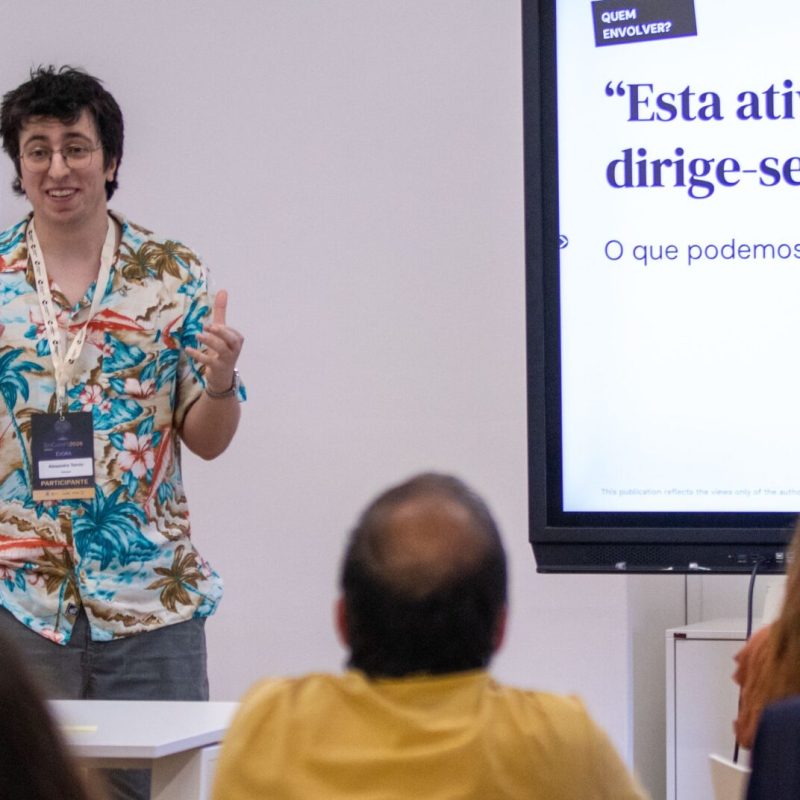
You can’t do good science communication on your own. That was the starting point for our workshop last week at the SciComPT 2026 Congress, a gathering of the Portuguese science communication community held in beautiful Évora. If the people your work is meant to reach aren’t part of shaping it, the result tends to fall flat, no matter how polished it looks.
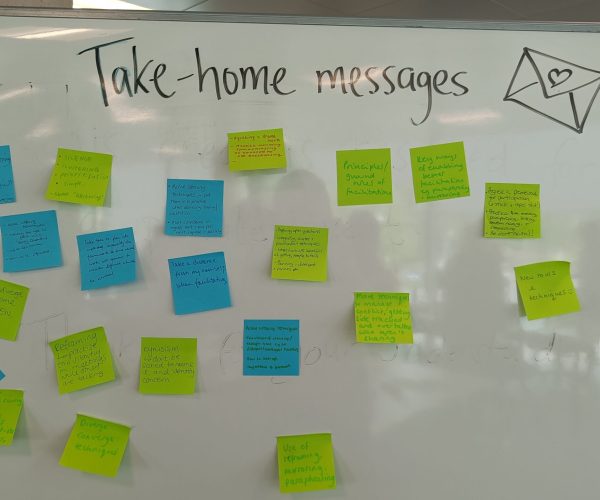
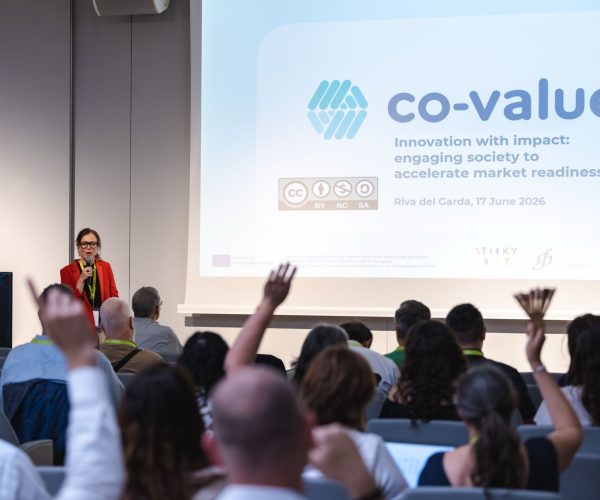
The session, “Beyond dissemination: engaging stakeholders in science from the start”, brought together communicators working across nuclear physics, climate adaptation, agriculture, health, and more. Together they worked through who to involve in their projects, why, and at what stage. The conversations were (very!) lively, and the ideas that came out of the room ranged from community picnics to co-designed TV formats.
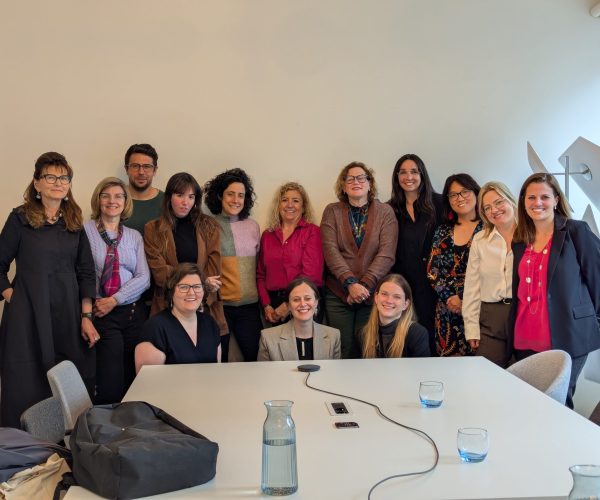
Stickydot’s Alexandre Torres, who led the session, was also at the conference representing COALESCE, the European Competence Centre for Science Communication, alongside Cristina Luís (SciComPT) and Joana Magalhães (Science For Change). The three COALESCE hubs (Belgium, Portugal, and Spain) were there to invite Portuguese science communicators to join the Competence Centre at scicommcentre.eu.
The workshop runs again on 8 July as part of the SciComm Lunchtime Series offered by the Competence Centre – we’re already looking forward to seeing where the next group takes it!