Why a fishbowl?
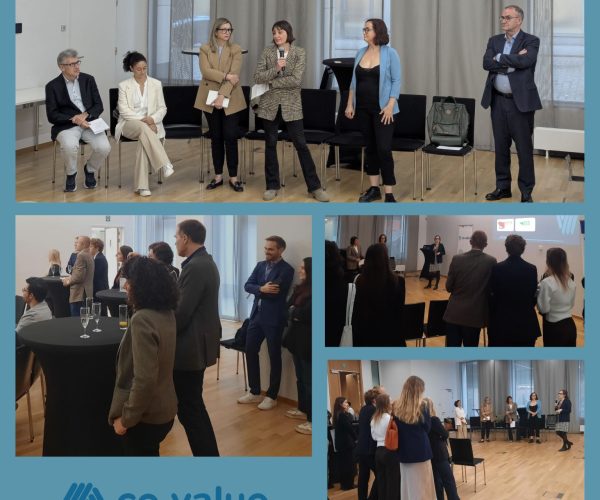
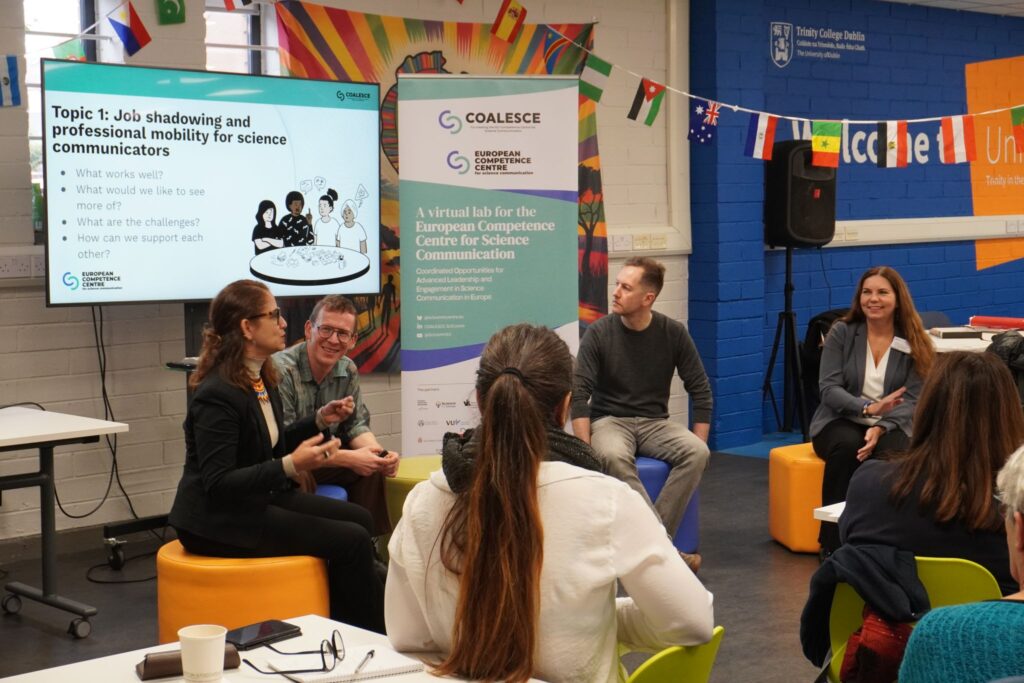
The meeting brought together colleagues from across Europe to share ideas on how job shadowing and training can support the professional development of science communicators. With so much experience in the room, we wanted a format that would get people talking to each other rather than listening to a few voices from a stage.
If you’ve never been in a fishbowl, picture a small circle of chairs in the middle of the room. A handful of people sit inside and hold the conversation, while everyone else watches from around the edges. Anyone watching can swim in to take a free seat and join the discussion, and anyone inside can swim back out to make room for someone else. It’s carefully facilitated, but the conversation belongs to the people in the circle.
The difference from a typical panel was striking. People spoke more freely, challenges and criticisms came up more openly, and some participants who hadn’t yet had the floor that day stepped into the circle and made their voices heard. That shift, from audience to contributors, is exactly what we hope for when we design participatory formats.
What came out of the circle
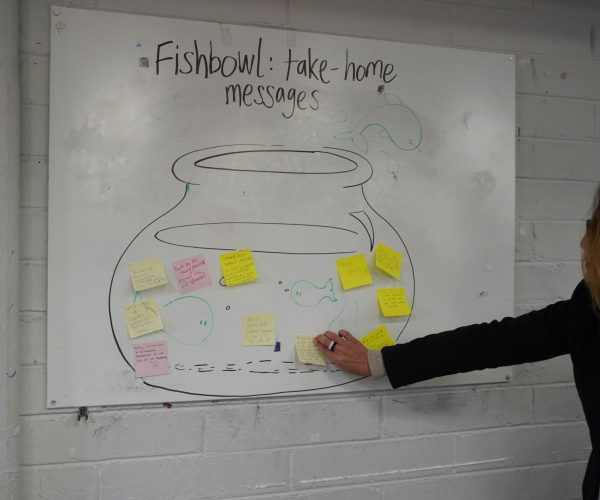
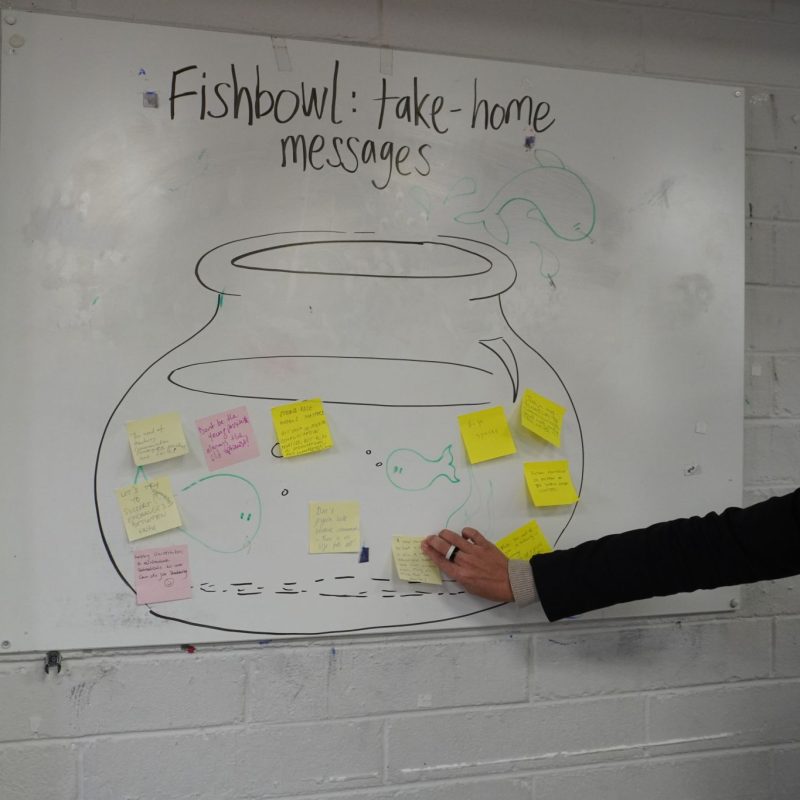
Throughout the session, participants captured their take-home messages on post-its. Here are some of the ideas that stood out.
On job shadowing. Many people saw job shadowing as a valuable way to learn from other science communicators, with one participant reminding us that “shadowing is not about copying, but about getting inspired and then adapting ideas.” Others pointed out that the benefits flow both ways: “Hosting a job shadow is also a very educational opportunity for your own organisation. They see things that we don’t!” There were practical suggestions too, from researching the people and projects before a visit to supporting exchanges between hubs and rethinking mentorship alongside shadowing. And our favourite discovery of the day came from the participant who wrote that they now know what job shadowing is, “and that it’s nothing illegal.”
On defining science communication. Rather than trying to pin down a single definition, the group leaned towards keeping things open. The message was clear: there is no one size fits all, and the definition should stay open while still being discussed, so that the field doesn’t box itself in.
On training and motivation. A recurring theme was that skills alone aren’t enough. As one post-it put it: “Train the motivation to communicate, not only the skill.” Participants called for low-threshold ways to motivate researchers to get involved, and for training that covers practical strategies as well as skills.
On purpose, audiences and language. Several people reflected on the bigger “why” behind science communication. One reminded us that communication skills go beyond the verbal, to creating and holding space for others. Others highlighted language as a real barrier to engagement with the public, warned against science communication drifting into scholarly communication, and stressed the importance of listening to the needs of the researchers we train, not only to the public.
On mindset. Finally, a few post-its simply made us smile, while carrying a serious point about the role models and attitudes that shape the field. Our favourite: “Don’t be the young pessimist. Always be the old optimist!”
More spaces for mutual learning
One participant asked for more formats like this fishbowl to support mutual learning between science communication researchers, project consortia and practitioners. Another suggested gathering the post-it insights, sharing them around and turning them into action points for the consortium. We couldn’t agree more, and this blog is a small first step in that direction.
Thank you to everyone who dived in!
If you’re interested in more formats for engagement, sign up to the European Competence Centre for Science Communication at scicommcentre.eu, or get in touch with us. We’d love to hear from you.